October 2026: C-10 Files New Legal Letter Asking NRC Commissioners to Improve Seabrook Station's Concrete Testing Program
KEY REFERENCES: C-10's Oct. 2026 Letter + Attachments
What's Next?
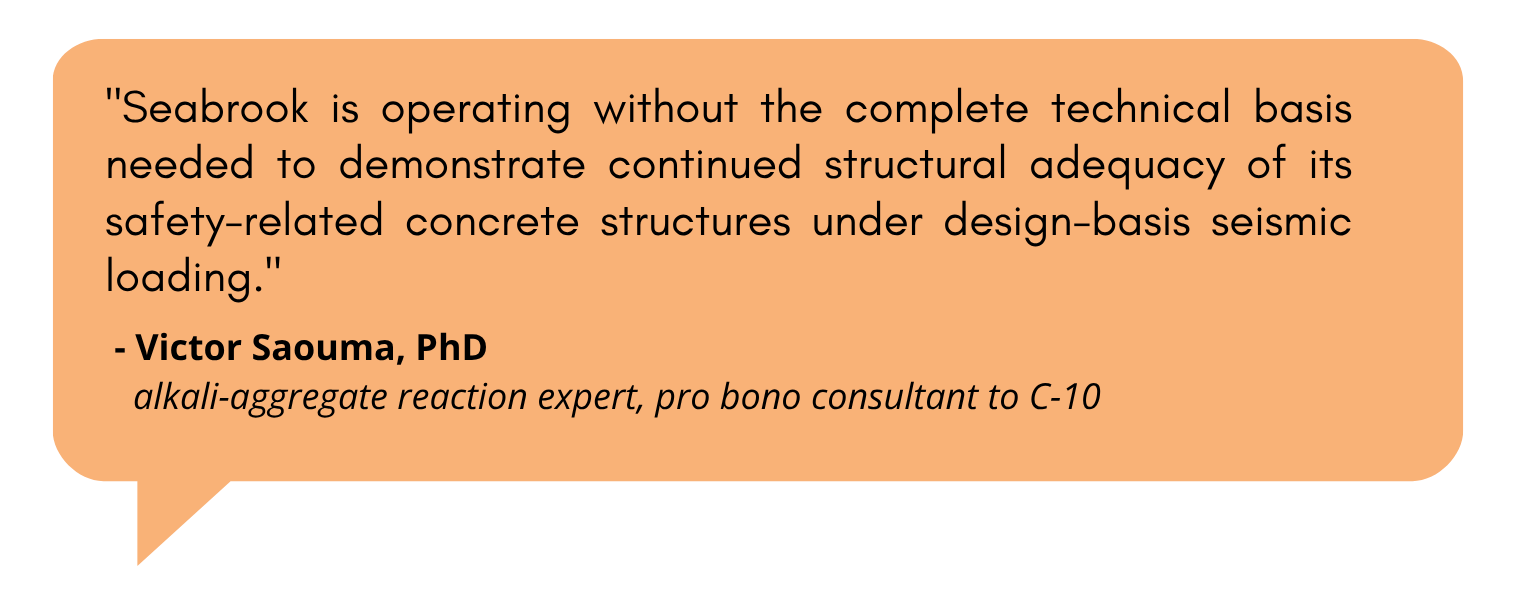
October 8, 2026: Right now we know that the concrete at the Seabrook Nuclear Plant has already been degrading faster than the plant owners NextEra predicted using their faulty tests, and that some structures will have cracks so big and walls so deformed that by 2034 or later they will be beyond what the plant's current operating license allows. We also know that NextEra plans to get around this by repeating their faulty tests methods, to attempt to show the facility can be safe with even more concrete damage than tested previously, in order to get the Nuclear Regulatory Commission's approval to continue to operate well into the future. Dr. Saouma is clear: the tests must be redesigned to be representative, and adhere to the standard scientific and engineering practices, to find the objective truth about the safety of Seabrook's nuclear plant concrete.
Background
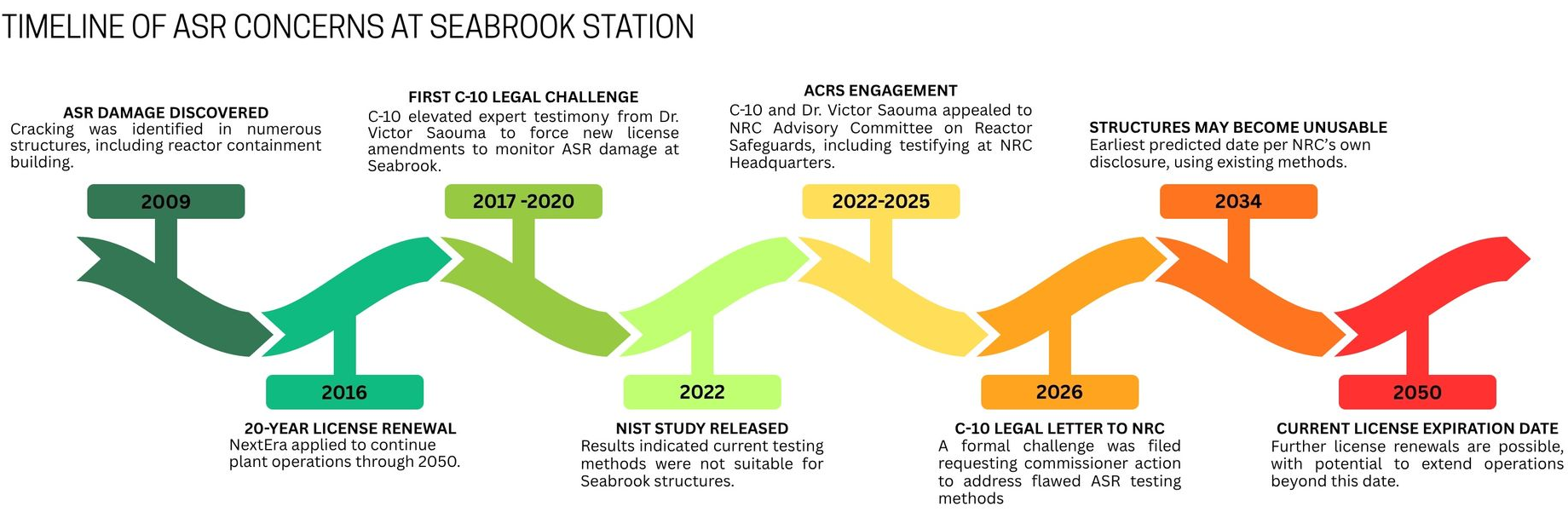
In 2017 C-10 and Dr. Victor Saouma first challenged the Nuclear Regulatory Commission (NRC) to address Seabrook Station's long-documented concrete problems caused by alakali-silica reaction (ASR) induced cracking. ASR is often referred to as "concrete cancer". As a result, in 2020 the NRC imposed new license conditions that required Seabrook Station to implement a concrete testing program, including limits for how much concrete expansion could occur before further action would be needed.
At that time the NRC also asked the National Institute of Standards and Technology (NIST) to study concrete with ASR to identify the best methods for testing structures afflicted by it. It was understood that Seabrook Station's testing program would later incorporate any new information from this study to improve the testing methods used there.
Study Results
The NIST results were released in 2022, and findings indicated that existing concrete tests currently used by Seabrook Station were not likely to provide an accurate assessment of ASR-damage. C-10 and world-leading concrete scientist Dr. Victor Saouma have been urging the NRC to use the NIST results as the basis for Seabrook Station's concrete testing program moving forward. This included testifying before the NRC's Advisory Committee on Reactor Safeguards (ACRS) several times, including at NRC Headquarters in Washington, D.C. However, as of October 2026, NextEra's second testing program is scheduled to begin soon and it has said that their testing methods will remain unchanged.
What are we asking from the NRC?
Our new letter requests for NRC commissioners to intervene and direct that NRC staff require Seabrook Station's testing program be updated to reflect new data obtained from the NIST study, rather than continuing to rely on outdated and inaccurate tests. Realistic, representative tests are needed now, before concrete expansion at Seabrook exceeds current limits. The specific requests we are asking for include:
- Test concrete specimens that represent structures at Seabrook Station, such as shear walls or shear panels, instead of beams.
- Compare test samples against age-matched control specimens that haven't undergone ASR expansion.
- Require independent peer review of any new testing program, to ensure ASR expertise is part of evaluation.
Expert Witness: Dr. Victor Saouma
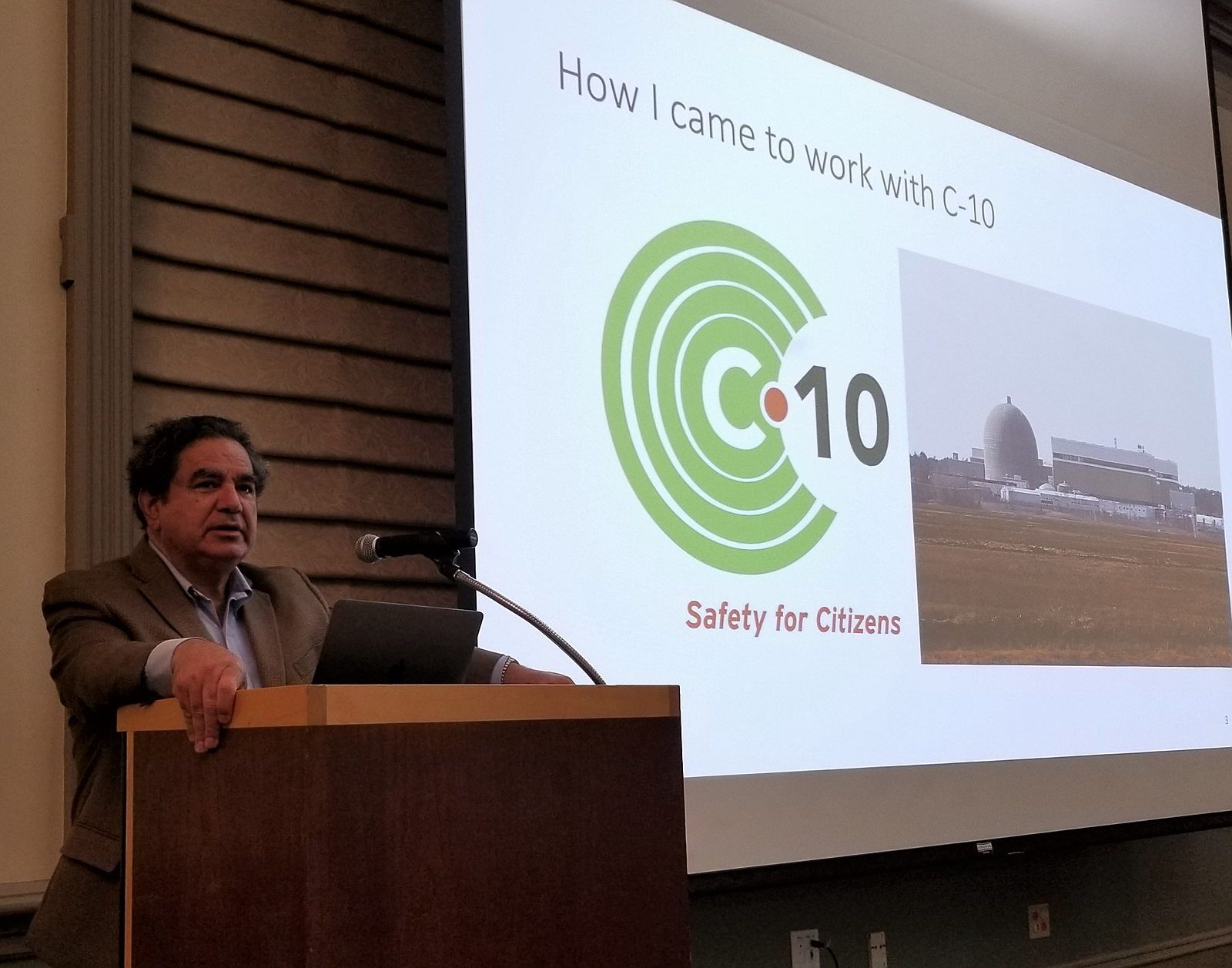
Dr. Saouma giving a guest lecture on his expert testimony and consultation to C-10 on the ASR-issue at Seabrook Station at the 2019 C-10 Annual Public Meeting in Newburyport, MA
Dr. Saouma's work has been a key part of the impact C-10 has only been able to make on the "concrete cancer" problem plaguing Seabrook Station. He is the world-leading expert on ASR and the impacts it has on concrete structures, and has authored numerous books and papers on his research.
We are very grateful he has dedicated much of his career to improving the safety of large structures affected by ASR, including decades of individual and committee led research and solutions engineering for large dams affected by this issue.
A full summary of Dr. Saouma's technical credentials and expertise is available here.
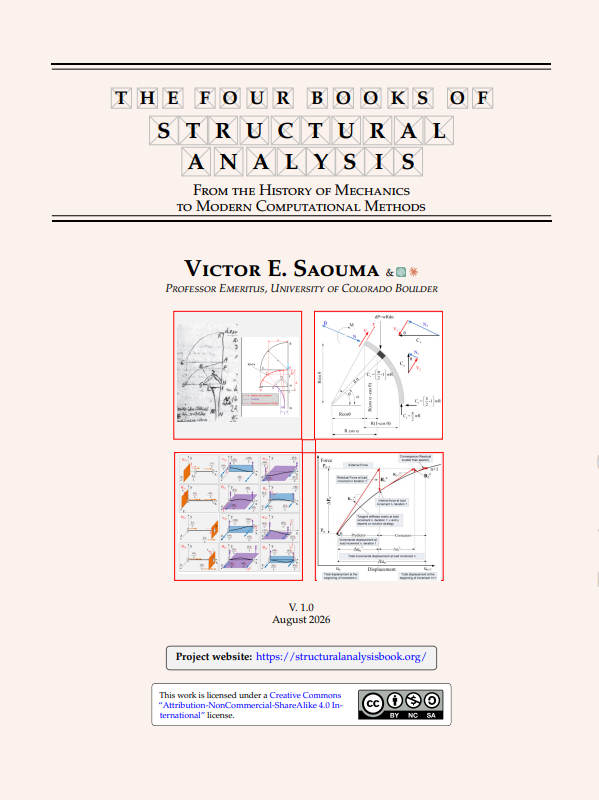
Dr. Saouma has authored a free and publicly available new textbook: The Four Books of Structural Analysis, a scholarly rigorous systematic genealogy of mechanics and structural analysis, which can be accessed by visiting: https://structuralanalysisbook.org